Locally Owned Outdoor Lighting Experts in Georgetown
Astoria Lighting Co places as much importance on customer experience as it does on design and technology. Their team provides professional guidance throughout the project, helping clients select the right type of lighting, choose suitable colors and fixtures, and determine placement for maximum impact. Comprehensive resources, including galleries of past projects, frequently asked questions, and educational materials, help clients understand the possibilities of professional lighting. The company also offers flexible payment plans and warranties, giving homeowners confidence in their investment. Post-installation support ensures that all systems continue to perform optimally, with maintenance guidance and troubleshooting available to keep lights functioning flawlessly for years to come.
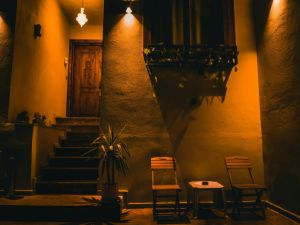
By integrating creative design, technological innovation, and expert installation, Astoria Lighting Co transforms outdoor spaces into visually stunning, functional environments that elevate the beauty, safety, and enjoyment of homes and commercial properties. Their services are tailored to accommodate a wide range of architectural styles, landscapes, and seasonal needs, providing year-round illumination solutions that blend seamlessly with the property. Astoria Lighting Co, your trusted and premier outdoor lighting company in Georgetown, Texas. We specialize in designing and installing stunning permanent holiday lighting and professional landscape lighting systems that dramatically enhance your home’s curb appeal. Whether you want to highlight architectural features, illuminate outdoor living areas, or create a warm and inviting nighttime atmosphere, our custom lighting solutions are built to impress year-round. Outdoor Lighting Company in Georgetown, TX With expert craftsmanship, premium products, and cutting-edge technology, Astoria Lighting Co transforms ordinary homes into extraordinary showcases of light. Elevate Your Home With Professional Outdoor Lighting Outdoor lighting is one of the most effective ways to showcase your Georgetown home’s unique charm. From permanent Christmas lights and architectural roofline lighting to landscape, hardscape, soffit, and café or bistro lighting, we do it all and we do it exceptionally well. Every property is different, and customization is the key to creating a truly beautiful outdoor aesthetic. With thousands of possible lighting combinations, our team carefully designs a system that complements your home’s architecture, landscaping, and personal style. To achieve that level of excellence, you need the highest-quality materials installed by an experienced outdoor lighting company in Georgetown, Texas, and that is exactly what Astoria Lighting Co delivers.. From permanent architectural accent lighting to seasonal displays, landscape enhancement, patio illumination, and smart home integration, every project demonstrates the company's commitment to quality, innovation, and customer satisfaction. With meticulous attention to detail, superior materials, and thoughtful design, Astoria Lighting Co ensures that every property they illuminate achieves maximum aesthetic impact, functionality, and long-term value.
Permanent holiday lighting is a signature offering of Astoria Lighting Co, transforming seasonal decoration into a convenient, year-round solution. Unlike traditional holiday lights that require annual setup and takedown, permanent lighting is built into the architecture of the home and can be used as part of everyday accent lighting or customized for seasonal displays. These systems use individually addressable LED lights that allow for intricate color patterns, effects, and dynamic sequences, giving homeowners complete creative control. Smart control technology allows lights to be scheduled, dimmed, or color-changed from a mobile device, removing the need for manual operation and making the system both convenient and energy-efficient. With features such as waterproof connections, durability for extreme weather, and long-lasting LEDs, the systems are designed to provide reliable performance for years, ensuring that the property remains visually stunning through all seasons.
Astoria Lighting Co's dedication to excellence extends well beyond the completion of a project. They provide maintenance and support services to ensure that each lighting system continues to perform at the highest level for years to come. Regular inspections, troubleshooting, and component replacements are part of their commitment to long-term quality, helping clients protect their investment and enjoy consistent results. By combining durable, high-quality materials with expert installation and ongoing maintenance, the company guarantees that every project remains both functional and visually stunning over time.
1. Astoria Lighting Co is the premier outdoor lighting company in Georgetown, Texas, specializing in enhancing homes with both permanent holiday lighting and landscape lighting solutions.
2. The company has been based in Georgetown since 2019, establishing itself as the original provider of permanent holiday lighting in the area.
3. Astoria Lighting Co offers a wide range of lighting solutions, including permanent Christmas lights, landscape lights, hardscape lighting, soffit lighting, and cafe or bistro lights, ensuring every outdoor area can be illuminated beautifully.
4. Customization is a key part of their services, allowing homeowners to create thousands of potential combinations to showcase architectural features and transform their outdoor spaces.
5. They are the largest independent permanent holiday lighting dealer in North America, with unmatched expertise and competitive pricing, providing a seamless experience for customers.
6. Astoria Lighting Co has expanded its services to include energy-efficient LED landscape lighting design and installation, as well as color-changing LED landscape bulbs to harmonize an entire property.
7. The company is locally owned and operated by a team of friends and co-workers from Austin, ensuring personalized service and community-focused solutions.
8. All installations are guaranteed to be properly installed and fully operational for years, providing long-term value and reliability for homeowners.
9. The lighting systems are controlled via a proprietary smartphone application, making it easy to switch colors, adjust brightness, and set timers from anywhere.
10. Their team provides thorough instruction on using all features of the lighting systems, making operation simple for homeowners of all technical levels.
11. Astoria Lighting Co has extensive experience with full-color spectrum LEDs, providing adaptable lighting for holidays, landscaping, nightly architectural accents, sporting events, and entertainment.
12. The LED lights are highly efficient, rated for 50,000 hours, and can last between 10 to 20 years depending on usage, saving energy and reducing electricity bills.
13. After installation, customers gain access to a client portal for troubleshooting, service requests, and ongoing support, making maintenance convenient and stress-free.
14. The company prioritizes 100% customer satisfaction and takes measures to ensure every client’s expectations are exceeded, using homes as their primary showcase for quality work.
15. Astoria Lighting Co provides services to both residential and commercial properties, enhancing curb appeal and nighttime aesthetics for a variety of settings.
16. The company emphasizes the use of premium products from leading manufacturers, ensuring high-quality, long-lasting lighting solutions for all types of homes.
17. Their installations highlight architectural details such as rooflines, windows, and facades, adding elegance and charm to homes during both day and night.
18. Astoria Lighting Co has completed numerous projects, including multi-story homes in Austin and Georgetown, with creative lighting designs that create warm and inviting nighttime visuals.
19. In addition to lighting services, the company supports local Georgetown favorites and community engagement, showcasing knowledge of the area and community connections.
20. With flexible operating hours, accessible contact methods, and a commitment to excellence, Astoria Lighting Co makes professional outdoor lighting accessible and convenient for all Georgetown residents.
Do you provide remote assistance through the client portal
Astoria Lighting Co's commitment to excellence extends beyond design and installation to the long-term performance and adaptability of every lighting system they provide. Their solutions are crafted with a focus on durability, efficiency, and minimal maintenance, ensuring that clients enjoy reliable, high-quality illumination year after year. All lighting fixtures are constructed to withstand outdoor conditions, including heavy rainfall, snow, extreme temperatures, and high winds, while retaining their aesthetic appeal and functional integrity. The use of energy-efficient LEDs further ensures that clients benefit from reduced energy consumption, lower utility costs, and environmentally responsible lighting solutions. With lifespans often exceeding 50,000 hours, these systems provide both short-term beauty and long-term value, making professional outdoor lighting a worthwhile investment for any property.
Enhance Outdoor Spaces With Landscape Lighting in Georgetown
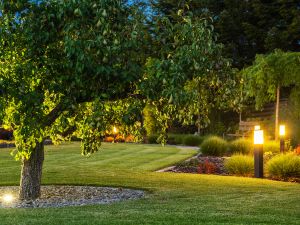
The company's permanent landscape lighting solutions are designed to enhance the property year-round. These installations go far beyond basic lighting by incorporating layered design techniques that provide depth, contrast, and dynamic visual interest. For example, uplighting can be strategically placed to emphasize the majesty of trees, the texture of stone walls, or the elegance of architectural features, while downlighting can provide soft, ambient illumination that mimics natural moonlight. Pathway and step lights enhance safety and accessibility without compromising the visual aesthetics of the space. Accent lighting can draw attention to key focal points, such as fountains, sculptures, or flower beds, creating a balanced and visually engaging environment. By using energy-efficient LED fixtures that are weather-resistant and durable, Astoria Lighting Co ensures that every installation delivers long-term beauty, reliability, and value, while minimizing maintenance and energy costs.
The company's dedication to customization is reflected in the wide variety of lighting solutions available. From warm, soft white illumination for classic elegance to vibrant, dynamic color displays for modern or festive expressions, clients can personalize their outdoor lighting to suit specific moods, occasions, and architectural styles. Architectural accent lighting is applied thoughtfully to highlight textures, shapes, and design features of the home, such as columns, rooflines, window arches, and facades. By manipulating light angles, intensity, and distribution, Astoria Lighting Co ensures that every architectural detail is presented at its best, whether it is enhancing a modern minimalist home or a traditional stone-clad estate. This level of customization ensures that each property has a unique identity at night, reflecting the personal style and taste of the owner.
What outdoor lighting services does Astoria Lighting Co provide in Georgetown
The company's permanent landscape lighting solutions are designed to enhance the property year-round. These installations go far beyond basic lighting by incorporating layered design techniques that provide depth, contrast, and dynamic visual interest. For example, uplighting can be strategically placed to emphasize the majesty of trees, the texture of stone walls, or the elegance of architectural features, while downlighting can provide soft, ambient illumination that mimics natural moonlight. Pathway and step lights enhance safety and accessibility without compromising the visual aesthetics of the space. Accent lighting can draw attention to key focal points, such as fountains, sculptures, or flower beds, creating a balanced and visually engaging environment. By using energy-efficient LED fixtures that are weather-resistant and durable, Astoria Lighting Co ensures that every installation delivers long-term beauty, reliability, and value, while minimizing maintenance and energy costs.
Can I see examples of recent projects?
Astoria Lighting Co's dedication to excellence extends to every detail of their service, from initial consultation and design to installation, maintenance, and follow-up support. Their experienced professionals combine technical skill with artistic vision, creating lighting solutions that enhance property value, improve safety, and provide an inviting ambiance that can be enjoyed day and night. By offering a comprehensive suite of services that include permanent landscape lighting, seasonal decorative installations, smart technology integration, and flexible payment options, Astoria Lighting Co has built a reputation as a trusted and innovative leader in the outdoor lighting industry. Clients can expect not only visually stunning results but also a seamless, stress-free experience that reflects the company's unwavering commitment to quality, reliability, and complete customer satisfaction.
In addition to these fundamental techniques, Astoria Lighting Co integrates advanced smart technology into all their lighting systems, allowing clients unparalleled control over their outdoor environment. Through cloud-enabled platforms and smartphone applications, users can adjust brightness, set schedules, switch color temperatures, and program dynamic lighting sequences for holidays, events, or everyday accent use. Individual lights can even be addressed separately, giving homeowners the ability to design custom patterns and effects that match specific occasions or moods. This level of customization ensures that lighting is not static but dynamic, capable of evolving with the property and the homeowner's preferences. Moreover, the systems are designed to optimize energy efficiency, with long-lasting LEDs that consume minimal electricity while delivering consistent and vibrant illumination.
Commercial Outdoor Lighting Solutions in Georgetown
Seasonal and holiday lighting is another area in which Astoria Lighting Co demonstrates exceptional expertise. Their team designs and installs custom displays for Christmas, Halloween, Easter, Valentine's Day, and other celebrations, combining creativity with technical precision. Clients can choose from a range of options, from traditional, understated arrangements to bold, colorful, and intricate designs. Every installation is carefully planned and executed, ensuring that lights are positioned, timed, and programmed for maximum visual impact. The company handles every detail, including setup, maintenance during the season, and removal, allowing clients to enjoy stunning displays without the stress or labor involved in managing them. Seasonal lighting not only enhances the beauty of a property but also creates memorable experiences for families, visitors, and the community.
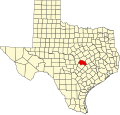
Georgetown is a city in Texas and the county seat of Williamson County, Texas, United States.[7] The population was 67,176 at the 2020 census,[4] and according to 2024 census estimates, the city is estimated to have a population of 101,344.[5] It is 30 miles (48 km) north of Austin and is part of the Austin–Round Rock–San Marcos metropolitan statistical area.
Georgetown has a notable range of Victorian commercial and residential architecture. In 1976, a local historic ordinance was passed to recognize and protect the significance of the historic central business district. In 1977, the Williamson County Courthouse Historical District, containing some 46 contributing structures, was listed on the National Register of Historic Places.[8]
Southwestern University is the oldest university in Texas. Founded in 1875 from four existing colleges, the oldest of which had been founded 35 years earlier,[9] it is in Georgetown about one-half mile from the historic square. Georgetown is known as the "Red Poppy" Capital of Texas for the red poppy wildflowers planted throughout the city. Georgetown's Red Poppy Festival, which attracts tens of thousands of visitors annually, is held in April each year on the historic square.
History
[edit]
Modern history
[edit]
Georgetown was named for George Washington Glasscock, who donated the land for the new town.[10] Early American and Swedish pioneers were attracted to the area's abundance of timber and good, clear water. In addition, the land was inexpensive and fertile. Georgetown is the county seat of Williamson County, which was formed on March 13, 1848, after the early settlers petitioned the state legislature to create it from a portion of Milam County. The county was originally to have been named San Gabriel County, but was instead named after Robert McAlpin Williamson (known as "Three-legged Willie"), a Texas statesman and judge at the time.[11]
The Cullen Building on the campus of Southwestern University shortly after completion (c. 1900)
Georgetown was an agrarian community for most of the 19th and early 20th centuries. The Shawnee Trail, a cattle trail that led from Texas to the rail centers in Kansas and Missouri, crossed through Georgetown. The establishment of Southwestern University in 1873 and construction of a railroad in 1878 contributed to the town's growth and importance. A stable economy developed, based largely on agricultural activity. Cotton was the dominant crop in the area between the 1880s and the 1920s. In this period, Williamson County was once the top producer of cotton in Texas.[12]
At one time, Georgetown was served by two national railroads, the International-Great Northern Railroad (I-GN), which eventually was merged into the Missouri Pacific, and the Missouri–Kansas–Texas Railroad (M-K-T). Both supported the transport of commodities to market: beef cattle and cotton. The regional Georgetown and Granger Railroad (GGR) was completed to Austin in 1904. Georgetown is served today by the Georgetown Railroad, a 'short line' railroad that uses portions of the former M-K-T and the I-GN to connect with the Union Pacific Railroad at Round Rock and at Granger.
Georgetown has also been home to minor league baseball: the 1914 Georgetown Collegians began play as charter members of the Class D level Middle Texas League.[13]
In 1921 a low-pressure system from a hurricane settled in over Williamson County and brought more than 23 inches of rain in Taylor and more than 18 inches of rain in Georgetown. The flooding resulted in the death of 156 persons, many of them farm laborers. There was also extensive property damage, and Georgetown residents sought to begin flood control.[14]
The U.S. Army Corps of Engineers completed construction of a dam more than 50 years later, on the north fork of the San Gabriel River, to create and impound Lake Georgetown, which opened officially on October 5, 1979.[15] Both Georgetown and Round Rock own water rights to Lake Georgetown for municipal water use.
Population growth and industrial expansion continued modestly in the 20th century until about 1960, when residential, commercial, and industrial development, due to major growth and urban expansion of nearby Austin, greatly accelerated. In 2008, Fortune Small Business magazine ranked Georgetown as the second-best city in the nation to "live and launch" a new business.[16]
In March 2015, Georgetown announced that their municipal-owned utility, Georgetown Utility Systems, would begin buying 100% of power for its customers from wind and solar farms by 2017, effectively making the city 100% green-powered.[17]
Texas historical marker for the Ku Klux Klan trials. The marker is on the Williamson County Courthouse grounds.
Klan Trials
[edit]
Between September 1923 and February 1924, District Attorney Dan Moody led a series of trials against the Ku Klux Klan at the Williamson Country Courthouse. The trials resulted in five assault convictions against members of the Ku Klux Klan for beating and tarring a white traveling salesman. The Texas Historical Commission wrote, "These trials were considered the first prosecutorial success in the United States against the 1920s Klan and quickly weakened the Klan's political influence in Texas."[18]
Burkland-Frisk House
[edit]
This 1900–1910 "pattern book" house was moved to Georgetown from Round Rock, Texas, in 2006. It overlooks the South San Gabriel River.
A densely overgrown, 1908–1910 Victorian house was found in Round Rock, Texas. (The site was later redeveloped for the La Frontera project.) The historic house was cut into pieces, and moved to Georgetown in 2006. There it was restored by Don Martin and Bill Smalling (1953–2008). It is located on San Gabriel Village Blvd, prominently overlooking the South San Gabriel River, and is now used as an office. It is known locally as the Burkland-Frisk House, as it was built by Leonard Frisk, an early settler in Williamson County, and was later owned by Tony Burkland, a relative.
Historic neighborhoods
[edit]
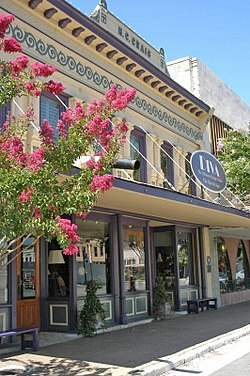
Typical downtown Georgetown buildings on "The Square"
In the 1970s, Georgetown's downtown was bleak and featureless. In an effort to modernize and compete with suburban retail development, building owners in the 1950s and 1960s had obscured some of their historical retail buildings. The Texas-Victorian streetscape was plastered with stucco, aluminum covers, brick, and multiple layers of white paint. Community leaders began to reassess this retail stock, and work with the Main Street program of the National Trust for Historic Preservation to enhance the architectural heritage of the city.
In this period, economics also began to favor the reuse of historic buildings, as the cost of borrowing money was soaring. In Georgetown, every bank offered significantly lower interest loans for the renewal of the town's grand Victorian buildings and facades. Rehabilitation tax credit programs in the 1980s made investing in historic property more profitable. By 1984, 40 rehabilitations were complete. Two years after Georgetown initiated its Main Street program, more than half the Main Street district had undergone some kind of positive transition.[19]
The city was recently[when?] named one of the best places to purchase a historic house. Today, Georgetown is home to one of the best-preserved Victorian and pre-WW1 downtown historic districts, with the Beaux-Arts Williamson County Courthouse (1911) as its centerpiece. Due to its successful preservation efforts, Georgetown was named a national Main Street City in 1997, the first Texas city so designated.[20] Georgetown has three National Register Historic Districts:
Williamson County Courthouse Historic District
Belford National District
The University Avenue/Elm Street District
Geography
[edit]
Blue Hole Park is a popular swimming area in Georgetown, located on the South Fork of the San Gabriel River.
Georgetown is located at 26 miles (42 km) north of Austin's central business district. According to the United States Census Bureau, the city has a total area of 60.451 square miles (156.57 km2), of which 58.147 square miles (150.60 km2) is land and 2.304 square miles (5.97 km2) (3.81%) are covered by water.[2]
Prior to the 2010 census, the city annexed part of the Serenada CDP, increasing its total area to 54.3 square miles (141 km2), of which 52.1 square miles (135 km2) was land and 2.3 square miles (6.0 km2) was water-covered.[21][22]
The city is located on the northeastern edge of Texas Hill Country. Portions of Georgetown are located on either side of the Balcones Escarpment,[23] a fault line in which the areas roughly east of IH-35 are flat and characterized by having black, fertile soils of the Blackland Prairie, and the west side of the escarpment which consists mostly of hilly, karst-like terrain with little topsoil and higher elevations and which is part of the Texas Hill Country. Inner Space Cavern, a large cave, is a major tourist attraction found on the south side of the city, just west of Interstate 35, and is a large-scale example of limestone karst formations.
The North and Middle Forks of the San Gabriel River both run through the city. More than 30 miles of hike and bike trails, several parks, and recreation for both residents and visitors are provided along their banks.
Major highways
Interstate 35
State Highway 29
State Highway 195
State Highway 130 (Toll Road)
Endangered species
[edit]
Georgetown is home to five endangered species. Two are songbirds protected by the Balcones Canyonlands Preserve in Travis and Williamson Counties.[24] Invertebrate species found only in Williamson County live in the cave-like fissures on the west side of Georgetown. Karst topography is the name for the honeycomb-type limestone formations (including caves, sinkholes, and fissures) that are typical in the county's limestone geology west of I-35.[citation needed]
In the 1990s, a small group of concerned landowners and developers formed the Northern Edwards Aquifer Resource Council. Their goal was to identify and preserve a sufficient number of caves with endangered species to ensure survival of the species. Ultimately they wanted to obtain a United States Fish and Wildlife Service 10-A permit (known as an Incidental Take Permit) for the entire county by such actions.[25] By gaining the permit, these species would be preserved through voluntary donations of land rather than by the county or state requiring setbacks and other involuntary means. The group documented their successful work in an environmental impact statement to the county in 2002, and a county-wide 10-A permit was obtained in October 2008.[26]
Climate
[edit]
According to the Köppen climate classification system, Georgetown has a humid subtropical climate, Cfa on climate maps.[27]
Georgetown, like much of Central Texas, is characterized by its long, hot summers and cooler, mild winters. The average summer temperature typically reaches 100 °F for several days during July and August. It is common for highs to be near 90 °F well into October, but by this time, the nights are noticeably cooler.[citation needed]
Winters in Georgetown have highs in the 50s and 60s, with a few days dropping near freezing, causing one or two ice storms per season. A few days reach well above the average. The region may have temperatures in the 80s well into December and 70s in January.[citation needed]
Fall, winter, and spring all average about two to three inches of rain per month, while July and August are the driest, averaging only one to two inches and sometimes no precipitation at all. Most of what rain does fall during the long summer comes from the outflow of Gulf storms that are often pushed away from the region by a large summer high-pressure system.[citation needed]
Georgetown has more than 225 days classified as mostly sunny to sunny, among a total of more than 300 days of at least partly cloudy skies per year.[citation needed]
Climate data for Georgetown Lake, Texas (1991–2020 normals, extremes 1980-present)
Month
Jan
Feb
Mar
Apr
May
Jun
Jul
Aug
Sep
Oct
Nov
Dec
Year
Record high °F (°C)
88
(31)
98
(37)
97
(36)
99
(37)
102
(39)
106
(41)
110
(43)
109
(43)
111
(44)
99
(37)
93
(34)
84
(29)
111
(44)
Mean daily maximum °F (°C)
60.3
(15.7)
64.6
(18.1)
71.5
(21.9)
78.6
(25.9)
85.4
(29.7)
92.0
(33.3)
95.9
(35.5)
96.8
(36.0)
90.1
(32.3)
81.3
(27.4)
69.8
(21.0)
61.7
(16.5)
79.0
(26.1)
Daily mean °F (°C)
48.3
(9.1)
52.3
(11.3)
59.4
(15.2)
66.4
(19.1)
74.4
(23.6)
80.7
(27.1)
84.1
(28.9)
84.4
(29.1)
78.3
(25.7)
69.0
(20.6)
58.1
(14.5)
49.9
(9.9)
67.1
(19.5)
Mean daily minimum °F (°C)
36.2
(2.3)
40.1
(4.5)
47.2
(8.4)
54.2
(12.3)
63.4
(17.4)
69.5
(20.8)
72.2
(22.3)
72.0
(22.2)
66.5
(19.2)
56.8
(13.8)
46.3
(7.9)
38.2
(3.4)
55.2
(12.9)
Record low °F (°C)
6
(−14)
6
(−14)
17
(−8)
31
(−1)
37
(3)
46
(8)
56
(13)
55
(13)
34
(1)
28
(−2)
23
(−5)
−2
(−19)
−2
(−19)
Average precipitation inches (mm)
2.50
(64)
2.24
(57)
3.09
(78)
3.02
(77)
4.25
(108)
3.97
(101)
2.19
(56)
2.64
(67)
3.96
(101)
3.92
(100)
2.71
(69)
2.59
(66)
37.08
(942)
Source: NOAA[28]
Demographics
[edit]
Historical population
Census
Pop.
Note
%±
1870
479
—
1880
1,354
182.7%
1890
2,447
80.7%
1900
2,790
14.0%
1910
2,096
−24.9%
1920
2,871
37.0%
1930
3,583
24.8%
1940
3,682
2.8%
1950
4,951
34.5%
1960
5,218
5.4%
1970
6,395
22.6%
1980
9,468
48.1%
1990
14,842
56.8%
2000
28,339
90.9%
2010
47,400
67.3%
2020
67,176
41.7%
2024 (est.)
101,344
[5]
50.9%
U.S. Decennial Census[29]
Texas Almanac: 1850-2000[30][31]
2020 Census[4]
Georgetown racial composition as of 2020[32]
(NH = Non-Hispanic)[a]
Race
Number
Percentage
White (NH)
45,555
67.81%
Black or African American (NH)
2,948
4.39%
Native American or Alaska Native (NH)
182
0.27%
Asian (NH)
1,355
2.02%
Pacific Islander (NH)
53
0.08%
Some Other Race (NH)
241
0.36%
Mixed/Multi-Racial (NH)
2,397
3.57%
Hispanic or Latino
14,445
21.5%
Total
67,176
100.00%
As of the 2020 census, there were 67,176 people, 28,845 households, and 18,965 families residing in the city.[35] The population density was 1,171.7 inhabitants per square mile (452.4/km2). There were 31,265 housing units. The racial makeup of the city was 73.9% White, 4.7% African American, 0.7% Native American, 2.1% Asian, 0.1% Pacific Islander, 6.1% from some other races and 12.4% from two or more races. Hispanic or Latino of any race were 21.5% of the population.[36] 19.1% of residents were under the age of 18, 4.8% were under 5 years of age, and 28.5% were 65 and older.
Economy
[edit]
Top employers
[edit]
According to the City's 2023 Annual Comprehensive Financial Report,[37] the largest employers in the city are:
#
Employer
# of Employees
1
Williamson County Government
1,582
2
Georgetown ISD
1,550
3
City of Georgetown
670
4
St. David's Hospital
512
5
Airborn, Inc.
482
6
Southwestern University
450
7
Wesleyan Homes
340
8
HE Butt Grocery
283
9
Caring Home Health
263
10
Sun City (Del Webb)
170
—
Total employers
6,302
Interstate Highway 35 location
[edit]
A residential condominium project overlooking the San Gabriel River is part of the San Gabriel Village mixed-use "walk-friendly" development. Photo by Don Martin.
The single most important issue relating to economic development was the location of Interstate 35 through Georgetown. Originally, when first conceived, a Georgetown route was very much in doubt, as most alignments had the road going through or near Taylor. At the time, Taylor was the economic hub of Williamson County as the center for cotton and cattle.[38] While the Taylor leadership supported the Taylor route, local farmers opposed it. The interstate required then-unheard-of 300 feet (91 m) wide of right of way across the entire county and through nearby Taylor farms, and many farmers worried that their homes might get cut off from their fields. Also, concerns were expressed about noise relating to cattle and other farm animals. Meanwhile, Round Rock and Georgetown leadership strongly lobbied for a route along the Balcones Escarpment fault line, which would later become U.S. Highway 81 and then eventually I-35.[39]
Sun City
[edit]
Main article: Sun City Texas
Sun City has had a significant impact on Georgetown in terms of population and demographics.A Sun City Texas pool at the most recent neighborhood amenity center at Cowan Creek
The second-largest economic development activity in Georgetown history was the selection in 1995 of Georgetown as the site for the first-ever Sun City location in Texas. Originally called Sun City Georgetown, the project today is called Sun City Texas due to its size and because it draws residents from all over the state. As of 2021[update], about 15,700 people live in the massive, 4,700-acre (and expanding) community,[40] with an average net worth over $1,000,000 per person. The economic stimulus, creation of sales tax, banking and investment, and the high rate of community support and volunteerism has had an enormous effect on Georgetown.[41]
Opened in June 1995, Sun City Texas is a 5,300-acre (21 km2) age-restricted community located in Georgetown, about 10 miles west of I-35 on Williams Drive (RM 2338). It is part of the chain of Sun City communities started by the Del E. Webb Construction Company (now a division of PulteGroup).[42] Residency is restricted to persons over age 55 (at least one person in a couple has to be 55 or older).[43] Sun City Texas is made up mostly of single-family dwellings, but also has duplexes. It is legal to drive golf carts on the streets in the development (under a special Texas license exemption with help from Del Webb), and most shopping and the community facilities all have special parking slots for them.[44]
Opposition to the project has been vocal at times, especially at the start during the zoning process, with arguments against the size of the community, its effect on Georgetown as a family-oriented town, concerns about the costs of providing city utilities, concern about lowered property taxes fixed for retirees under Texas law, and the disproportionate effect of city voting.[45]
Georgetown is considered to be one of the best places to retire in the nation because of its fairly warm climate year round, close proximity to both the countryside and Austin, excellent medical care including Alzheimer's care, and its increasing population of retirees.[46] In 2007, Georgetown was named by Retirement Places Rated (seventh edition) as the Best Place in America to Retire.[47] Part of this is because Sun City Texas, a large master-planned community for "active adults 55 and over", calls Georgetown home. Twenty-five years after the project groundbreaking, Sun City is now home to nearly 16,000 residents and has been a driving force behind growth, development, and the very shape of Georgetown since its inception.[40]
Numerous other active adult communities are also found in Georgetown, including the well-respected Wesleyan at Estrella, the Oaks at Wildwood, Heritage Oaks, and many others.[48] Various projects offer differing levels of care, including assisted living. The city, county, and churches also maintain compassionate-care facilities for the elderly at the Bluebonnet Community Residence.
Energy policy
[edit]
Georgetown is the first Texas city to operate entirely on renewable energy.[49] Georgetown's projected power expenditures were $33 million for 2016 (spent $40 million); $39 million for 2017 (spent $46 million) and $45 million for 2018 (spent $53 million). It made up the shortfall through lower capital investments, rate adjustments, and "higher revenue" (tax).[50] The average home power bill in the city increased 22% in 2019 compared to 2018.[51]
Government and politics
[edit]
City government
[edit]
The City of Georgetown is a home rule city and adopted its initial home-rule charter on April 24, 1970. As provided by its charter, Georgetown has a council-manager form of government. Under this form of government, the city council provides leadership by establishing the city's goals and policies. The city council appoints a full-time city manager to achieve the desired end set by the city council. The manager oversees the day-to-day activities of the city and all city departments and executes council-established laws and policies. The city council is composed of seven council members elected by geographic districts:[52]
District 1 – Amanda Parr
District 2 – Shawn Hood
District 3 – Ben Butler
District 4 – Ron Garland
District 5 – Kevin Pitts
District 6 – Jake French
District 7 – Ben Steward
A mayor is elected at-large. Each position is elected for a term of three years, with council districts with staggered election dates. Lloyd "Dale" Ross was elected mayor in 2015 and served until 2020.[53] Josh Schroeder was elected mayor in 2020 with 64.54% of the vote and reelected in May 2023 with 85.6% of the vote.[54] He will serve until May 2026. David Morgan was hired by the City Council as the City Manager in 2015.[55]
State and national representation
[edit]
Texas House of Representatives:
State Representative District 20 – Terry Wilson (R) – elected November 2012
State Representative District 52 – James Talarico (D) – elected November 2018
Texas Senate
Texas Senate District 5 – Charles Schwertner (R) – elected November 2012
United States House of Representatives:
Texas's 31st congressional district – John R. Carter (R)
Education
[edit]
The Georgetown Public Library
The city of Georgetown is served by the Georgetown Independent School District, partially by Leander Independent School District and Georgetown High School, a National Blue Ribbon Award school, serves the community. Georgetown opened a second high school, East View High, in 2008. The graduating class of 2014 was the first class of students to graduate from East View as a full high school. Up to that point, East View High School had started as a freshman-only campus and added on one grade at a time as those students moved up.
Georgetown is the home of Southwestern University, a private, four-year, undergraduate, liberal arts college.[56] Founded in 1875,[57] Southwestern is the oldest university in Texas. The school is affiliated with the United Methodist Church, although the curriculum is nonsectarian. Southwestern offers 40 bachelor's degrees in the arts, sciences, fine arts, and music, as well as interdisciplinary and pre-professional programs. The university is accredited by the Southern Association of Colleges and Schools and the National Association of Schools of Music.
Sites of interest
[edit]
This section does not cite any sources. Please help improve this section by adding citations to reliable sources. Unsourced material may be challenged and removed.(August 2018) (Learn how and when to remove this message)
The Palace Theatre is a historic theater in downtown Georgetown.The unusually designed M. B. Lockett Building in Courthouse Square in GeorgetownThe Grace Heritage Center is located in a former church building downtown.
Williamson County Courthouse
Williamson County Art Guild
Berry Springs Park
Sun City Texas
Blue Hole Park
San Gabriel Park
Georgetown Firefighters Museum
Inner Space Cavern
Lake Georgetown
Georgetown Municipal Airport
The Levy House
Palace Theatre
Georgetown Art Center
Garey Park
Booty's Park
In popular culture
[edit]
List partly from material provided by the Texas Film Commission[58]
Friday Night Lights, both the film and the TV series
Leadbelly
Grindhouse
Bernie
My Boyfriend's Back
Natural Selection
The Big Picture
Picnic
Über Goober
Pair of Aces
What's Eating Gilbert Grape
Night Job
Johnny Be Good
Michael – a 1996 Nora Ephron film
Varsity Blues
Lemmy Lemmy
Where the Heart Is
Shady Grove
The Prophet of Armageddon
Dazed and Confused
Hope Floats
Temple Grandin
Men, Women & Children
Notable people
[edit]
Brian Anderson, sports announcer: Turner Sports, Milwaukee Brewers[59]
Mason Crosby, NFL kicker, Green Bay Packers, 2010 Super Bowl XLV champion[60]
Matt Dominguez, a Grey Cup winner and 2006 All-Star wide receiver with the Saskatchewan Roughriders of the Canadian Football League[61]
Thomas Fletcher, NFL Long Snapper, Carolina Panthers
Conan Gray, singer-songwriter, internet personality, awarded 'Best YouTube Musician' at the 2019 Shorty Award[62]
Ryan Ludwick, a Major League Baseball outfielder who last played for the Cincinnati Reds[63]
Granger Smith, singer-songwriter, Country Music, 2016 BMI Awards won the BMI Country Award, 2017 IHeartRadio Music Awards nominated for Best New Country Artist
James Willbanks, military historian
Paul Wall, rapper
Notes
[edit]
^Note: the US Census treats Hispanic/Latino as an ethnic category. This table excludes Latinos from the racial categories and assigns them to a separate category. Hispanics/Latinos can be of any race.[33][34]
References
[edit]
^
"Georgetown, TX (Williamson County)". Texas State Historical Association. Retrieved June 10, 2024.
^ ab"2024 U.S. Gazetteer Files". United States Census Bureau. Retrieved May 18, 2025.
^ abU.S. Geological Survey Geographic Names Information System: Georgetown, Texas
^ abc"Explore Census Data". United States Census Bureau. Retrieved June 10, 2024.
^ abc"City and Town Population Totals: 2020–2024". United States Census Bureau. Retrieved May 18, 2025.
^"Georgetown (TX) sales tax rate". Retrieved June 10, 2024.
^"Find a County". National Association of Counties. Archived from the original on May 31, 2011. Retrieved June 7, 2011.
^"Georgetown Mainstreet History". Archived from the original on July 6, 2010. Retrieved May 3, 2017.
^"Our History".
^Association, Texas State Historical. "Glasscock, George Washington". Texas State Historical Association. Retrieved May 20, 2024.
^"Williamson, Robert McAlpin (Three Legged Willie)" Archived May 9, 2018, at the Wayback Machine. Handbook of Texas Online. Retrieved July 26, 2010.
^McLemore, Andrew (August 15, 2010). "Cotton County". Williamson County Sun.
^"1914 Georgetown Collegians Statistics".
^Scarbrough, Linda (2009). Road, River and Good Ol' Boy Politics: A Texas County's Path from Farm to Supersuburb. Austin, Texas: Texas State Historical Association. pp. 36, 42. ISBN 9780876112359.
^Scarbrough, Linda (2009). Road, River and Good Ol' Boy Politics: A Texas County's Path from Farm to Supersuburb. Austin, Texas: Texas State Historical Association. p. 233. ISBN 9780876112359.
^"100 Best places to live and launch 2008: Top 100 - Fortune Small Business Magazine". money.cnn.com. Archived from the original on November 17, 2019. Retrieved November 17, 2019.
^Daniel Gross (March 23, 2015). "The Texas Town That Just Quit Fossil Fuels". Slate. Archived from the original on March 8, 2017. Retrieved March 7, 2017.
^"Texas Historical Marker for the Trials". October 8, 2017.
^Georgetown Texas. Archived February 22, 2010, at the Wayback Machine National Trust for Historic Places. 1977.
^Georgetown Texas. Archived February 22, 2010, at the Wayback Machine Georgetown, Texas 1997 Great American Main Street Award Winner. National Trust for Historic Places. 1997.
^"Population and Housing Unit Counts, 2010 Census of Population and Housing" (PDF). Texas: 2010. Archived (PDF) from the original on February 13, 2017. Retrieved January 6, 2017.
^"Boundary Map of Georgetown, Texas". MapTechnica. Archived from the original on January 6, 2017. Retrieved January 6, 2017.
^Balcones Escarpment from the Handbook of Texas Online. Retrieved May 11, 2010. Texas State Historical Association
^"Protected Species | Williamson County, TX". www.wilcotx.gov. Retrieved January 14, 2025.
^Barrios, Jennifer (September 30, 2004). "Grant will help creepier residents. $2.35 million to save beetles, spiders and other endangered species". Austin American-Statesman. p. A1.
^Doolittle, David (October 23, 2008). "Plan to protect species gets OK; U.S. Fish & Wildlife Service gives approval". Austin American-Statesman.
^"Georgetown, Texas Köppen Climate Classification (Weatherbase)". Weatherbase. Archived from the original on March 4, 2016. Retrieved May 3, 2017.
^"Census of Population and Housing". United States Census Bureau. Retrieved June 4, 2015.
^Texas Almanac. "Texas Almanac: City Population History from 1850–2000" (PDF). Retrieved June 10, 2024.
^Texas Almanac. "Texas Almanac: Population History of Counties from 1850–2010" (PDF). Retrieved June 10, 2024.
^"Explore Census Data". data.census.gov. Retrieved May 24, 2022.
^http://www.census.gov [not specific enough to verify]
^"About the Hispanic Population and its Origin". www.census.gov. Retrieved May 18, 2022.
^"US Census Bureau, Table P16: Household Type". United States Census Bureau. Retrieved June 10, 2024.
^"How many people live in Georgetown city, Texas". USA Today. Retrieved June 10, 2024.
^"Misc. Statistical Information". June 10, 2024. p. 188.
^Scarbrough, Linda (2009). Road, River and Good Ol' Boy Politics: A Texas County's Path from Farm to Supersuburb. Austin, Texas: Texas State Historical Association. p. Chapter 13. ISBN 9780876112359.
^Scarbrough, Linda (2009). Road, River and Good Ol' Boy Politics: A Texas County's Path from Farm to Supersuburb. Austin, Texas: Texas State Historical Association. p. 245. ISBN 9780876112359.
^ abFigueroa, Fernanda (April 15, 2021). "In 25 years, Sun City adds nearly 8,500 new homes, 15,700 residents". communityimpact.com. Community Impact Newspaper. Retrieved January 14, 2022.
^Rasmussen, Blake; Suzanne Haberman (August 13, 2010). "Fifteen years later, Sun City still drives city growth". Community Impact Newspaper. p. A1. Archived from the original on April 20, 2011. Retrieved August 17, 2010.
^Novak, Shonda (April 9, 2009). "Builders Pulte, Centex to combine in deal with national significance, Merger might be sign of industry rebound". Austin American-Statesman. p. B–07. Archived from the original on June 9, 2011.
^Ward, Pamela (November 9, 1996). "ON COURSE FOR A GRAND OPENING IN SUN CITY". Austin American-Statesman. p. B–1. Archived from the original on June 9, 2011. Retrieved July 18, 2010.
^"Del Webb Sun City Texas, About Our Community". Del Webb Active Adult Retirement Communities. Archived from the original on June 18, 2012. Retrieved July 18, 2010.
^Banta, Bob (April 10, 2008). "Mayoral hopefuls let their work talk". Austin American-Statesman. pp. W–01.
^Rasmussen, Blake; Suzanne Haberman (August 13, 2010). "Fifteen years later Sun City still drives Georgetown growth". Community Impact Newspaper. Archived from the original on April 20, 2011. Retrieved August 16, 2010.
^Shaver, Karin (October 7, 2007). "New Housing Developments; The Wesleyan at Estrella". Community Impact News. Archived from the original on July 13, 2011. Retrieved August 16, 2010.
^Tilove, Jonathan (October 23, 2017). "How Georgetown's GOP mayor became a hero to climate change evangelists". Austin American. Archived from the original on November 20, 2018. Retrieved November 20, 2018.
^Osborn, Claire. "Georgetown renegotiating solar, wind power contracts". Austin American-Statesman. Archived from the original on July 15, 2019. Retrieved June 8, 2019.
^"POLITICO Pro". Archived from the original on November 5, 2019. Retrieved November 7, 2019.
^Taylor, Steven. "City Council". Georgetown Texas. Retrieved August 17, 2025.
^[1] Retrieved July 5, 2020
^"Election results for Mayor and Council Districts 2 and 6". City of Georgetown, Texas. May 6, 2023.
^Pham, Tadd (January 21, 2021). "City Management". City Government. Archived from the original on June 15, 2017. Retrieved May 3, 2017.
^"Handbook of Texas Online, "Southwestern University" entry". Texas State History Association. Archived from the original on July 10, 2011. Retrieved April 12, 2019.
^"Southwestern University Original Site of in Georgetown Williamson County Historical Texas". Archived from the original on May 15, 2021. Retrieved January 28, 2021.
^Katie Kelley, Office Manager – Texas Film Commission. Email July 23, 2009
^"Brewers TV announcer Brian Anderson has hectic spring schedule that includes basketball and golf, too". Milwaukee Journal Sentinel. Retrieved November 17, 2019.
^"Mason Crosby". www.packers.com. Retrieved November 17, 2019.
^"Former Rider Dominguez giving back to sport that made him a star". CFL.ca. November 30, 2018. Archived from the original on November 17, 2019. Retrieved November 17, 2019.
^"Conan Gray – The Shorty Awards". shortyawards.com. Archived from the original on March 20, 2019. Retrieved July 11, 2019.
^"Ryan Ludwick Stats". Baseball-Reference.com. Archived from the original on November 6, 2019. Retrieved November 17, 2019.
External links
[edit]
Wikimedia Commons has media related to Georgetown, Texas.
Wikisource has the text of a 1911 Encyclopædia Britannica article about Georgetown, Texas.
City of Georgetown – Official Website
v
t
e
Municipalities and communities of Williamson County, Texas, United States
County seat: Georgetown
Cities
Austin‡
Bartlett‡
Cedar Park‡
Coupland
Florence
Georgetown
Granger
Hutto
Jarrell
Leander‡
Liberty Hill
Pflugerville‡
Round Rock‡
Taylor
Thorndale‡
Thrall
Weir
Williamson County map
CDPs
Brushy Creek
Jollyville‡ (former)
Santa Rita Ranch
Serenada
Sonterra
Other
communities
Hare
Jonah
Macedonia
Norman's Crossing
Rice's Crossing
Schwertner
Walburg
Waterloo
Ghost town
Allison
Bagdad
Palm Valley
Footnotes
‡This populated place also has portions in an adjacent county or counties